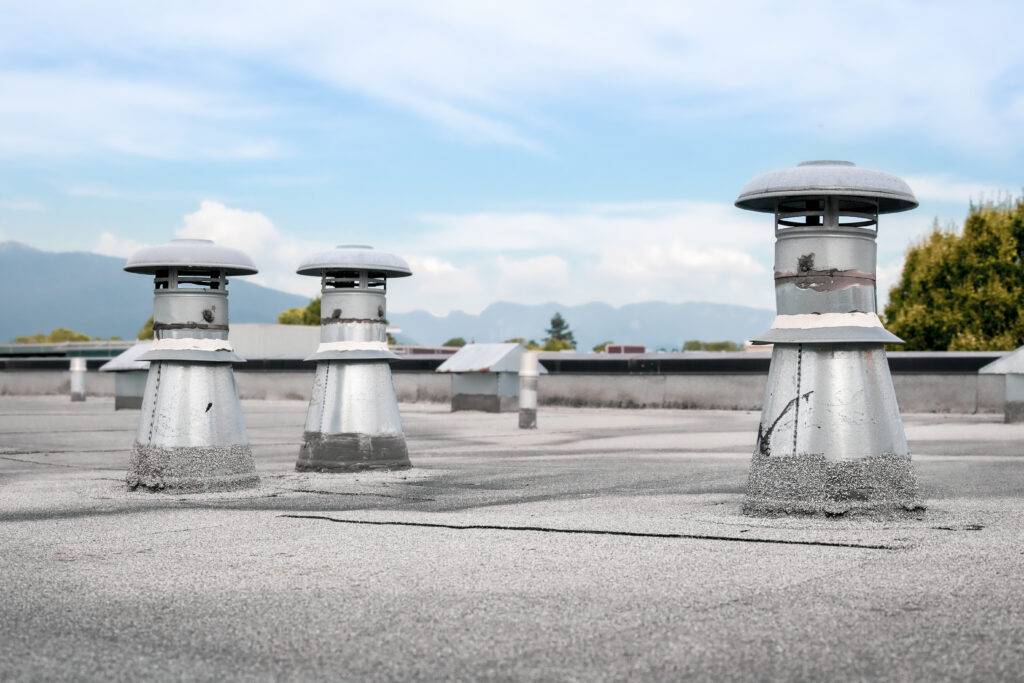
Modified bitumen roofing has been a trusted flat roofing system for decades, especially for commercial and industrial buildings. It’s often seen as an evolution of traditional built-up roofing (BUR), offering better flexibility and easier installation methods. But while modified bitumen has its advantages, it also comes with some serious drawbacks that modern roofing materials have been designed to overcome.
Let’s take a closer look at the pros and cons of modified bitumen roofing:
Advantages
Disadvantages
Why PVC Membrane Roofing Is a Better Option
PVC membrane roofing has become one of the most popular choices for commercial flat roofs—and for good reason. Unlike modified bitumen, PVC is lightweight, flexible, and engineered for long-term performance.
Here’s why many property owners are making the switch:
While modified bitumen roofing had its place, but modern roofing technology has evolved. PVC membrane roofing delivers longer lifespan, better performance, and lower lifecycle costs—making it the clear choice for today’s commercial and industrial roofs. Our team can evaluate your current system and show you how a PVC roof can deliver better performance, lower maintenance costs, and improved energy efficiency for years to come. Learn more about our commercial roofing solutions here.
Use the form below to give us some details about your project and we’ll get back with you as soon as possible! Or call us today at (239) 908-1700.
One of our certified inspectors will evaluate your roof, document any issues, and provide photos + recommendations — all at no cost.
Share a few quick details about yourself and your roof below. One of our experts will reach out to schedule your no-cost, no-obligation inspection. Prefer the phone? Call us directly at (239) 908-1700.
Share a few quick details about yourself and your roof below. One of our experts will reach out to schedule your no-cost, no-obligation inspection. Prefer the phone? Call us directly at (407) 841-6471
Use the form below to give us some details about your project and we’ll get back with you as soon as possible! Or call us today at (800) 303-8392.
One of our certified inspectors will evaluate your roof, document any issues, and provide photos + recommendations — all at no cost.