Is TPO Worth It? Why PVC May Be the Smarter Investment

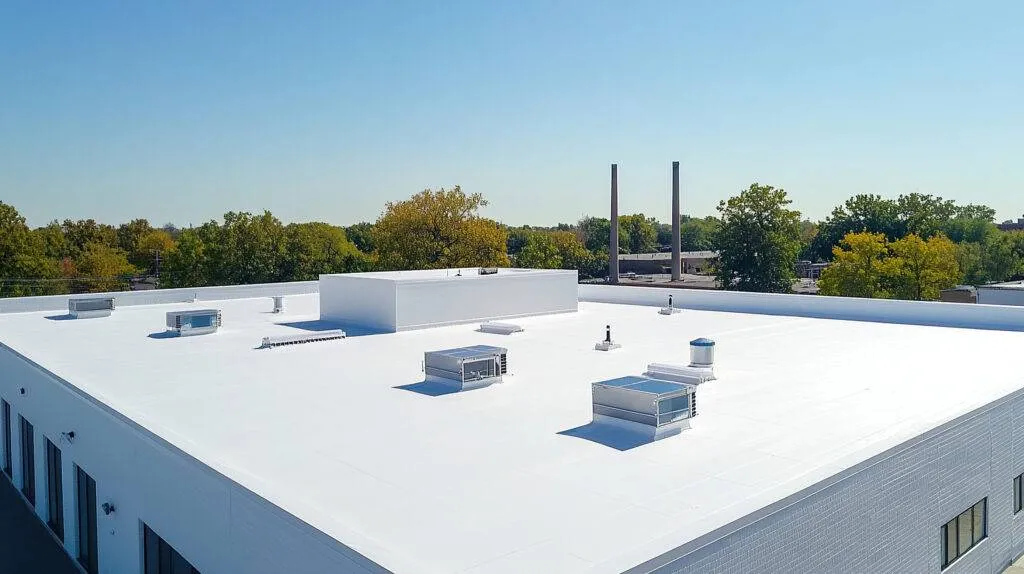
showing a flat roof after replacement

Thermoplastic Polyolefin (TPO) roofing has become one of the most commonly installed single-ply roofing systems in the U.S., especially on commercial and industrial buildings. Known for its white, reflective appearance, TPO is often chosen for its energy efficiency and affordability. But like all roofing systems, it comes with both strengths and limitations.

Advantages of TPO Roofing

TPO has earned popularity for several practical benefits:

  • Cost-Effective Production: TPO is relatively inexpensive to manufacture, making it an attractive option for building owners focused on initial cost.
  • Energy Efficiency & Color Options: While available in multiple colors, white remains the most common due to its reflectivity and cooling performance. White TPO keeps the air around rooftop HVAC intakes cooler, which helps the units use less energy to cool the building.
  • Versatile Installation Methods: TPO membranes can be installed using mechanical attachment or full adhesion, providing flexibility based on the building’s needs.
  • Heat-Welded Seams: The seams can be welded with heat, reducing the need for adhesives and offering a cleaner finish.
  • Reinforced with Scrim Fabric: TPO membranes include a scrim layer for added reinforcement.


Disadvantages of TPO Roofing

Despite its widespread use, TPO has a number of known challenges—some of which stem from the membrane’s relatively young history and evolving formulations.

  • Short Track Record: TPO has only been widely used for about 25–30 years. Many manufacturers are on their 4th or 5th formulation due to earlier failure issues.
  • Narrow Seam-Welding Window: TPO was intended to blend the reflectivity of PVC with the cost of EPDM, but the membrane has different chemical compositions on its top and bottom layers. This creates a very tight temperature range for proper heat welding, making consistent installation more difficult.
  • Weaker Scrim Reinforcement: TPO scrim typically has fewer threads per inch than PVC and lacks a true “rip-stop” design. If the membrane is punctured during high winds, it can “zipper tear” like EPDM—lowering puncture resistance and storm durability.
  • Rigid Material Creates Flashing Challenges: TPO is noticeably rigid. This makes flashing transitions more difficult and often requires manufacturers to supply separate (often unreinforced) flashing materials. Pre-fabricated flashing options are also limited.
  • Cannot Be Pre-Fabricated Into Sheets: All TPO sheets require field seaming—one of the most common failure points on commercial roofs.
  • More Sensitive to Thermal Movement: The rigidity also makes TPO more vulnerable to issues from expansion and contraction in changing temperatures.
  • Cures Over Time: As TPO ages, it cures, making it nearly impossible to heat-weld patches after a few years. This complicates future repairs.
  • Thickness Added to the Wrong Side: When manufacturers create “thicker” TPO membranes, the added thickness is on the bottom layer—not the top weathering surface that actually sees UV, heat, and environmental exposure.
  • Breakdown in Harsh Conditions: TPO degrades in ponding water, grease, animal fats, and concentrated solar radiation—making it less suitable for restaurants, industrial sites, or roofs with poor drainage.
  • Limited Use in Recover Applications: TPO recover options are restricted and may require thicker insulation separators or complete tear-offs for warranties.
  • Warranties Exclude Ponding Water: TPO warranties universally exclude failures caused by standing water, despite ponding being a common concern on low-slope roofs.


TPO vs. PVC: Why PVC Is Often the Better Long-Term Roofing Material

While TPO and PVC may look similar from the ground, their performance differences become clear over time. PVC has been in use for more than 50 years with a proven track record in all climates and building types. Its scrim reinforcement includes built-in “rip-stop” protection, making it far more resistant to punctures and tearing in high winds. PVC is also flexible—meaning it handles flashing transitions better, supports fully pre-fabricated accessories, and maintains weldability even decades later.

PVC membranes hold up exceptionally well against ponding water, chemicals, and grease, making them ideal for restaurants, food-processing facilities, and buildings with rooftop mechanical equipment. Their warranties typically cover situations that TPO excludes, and because PVC holds its chemical formulation more consistently, it offers better long-term durability and fewer formulation changes over time.

Our team specializes in high-performance PVC roofing systems, and for good reason. If you’re looking for a roofing system that delivers consistent performance and long-term reliability, PVC is the material we trust—and the one we recommend to our customers. Contact us today to schedule a free, no-obligation roof inspection and estimate. Our team will help you compare options, plan your project, and choose the system that delivers the best long-term value for your property.

Schedule Your Free Roof Inspection

Share a few quick details about yourself and your roof below. One of our experts will reach out to schedule your no-cost, no-obligation inspection. Prefer the phone? Call us directly at (239) 908-1700.

Schedule Your Free Roof Inspection

Share a few quick details about yourself and your roof below. One of our experts will reach out to schedule your no-cost, no-obligation inspection. Prefer the phone? Call us directly at (407) 841-6471

Get a Quote...

Use the form below to give us some details about your project and we’ll get back with you as soon as possible! Or call us today at (800) 303-8392.

Schedule Your Free Roof Inspection

One of our certified inspectors will evaluate your roof, document any issues, and provide photos + recommendations — all at no cost.